← Oskars Cirsis Work / MemoReel

Computer Love · two products, two audiences · 2026

MemoReel

MemoReel is for families: it repairs photographs that already exist. MemoReel Studio is for events: an AI photobooth system that makes ones that didn't.

Scroll ↓
Year
2026
Role
Co-founder, product, design & AI workflows
MemoReel
B2C · families · by the photo · memoreel.family, memoreel.lv
MemoReel Studio
B2B · brands, agencies, events · by the event · studio.memoreel.lv

The idea

One technology, two businesses that share nothing but a name. MemoReel is a consumer product: upload a scratched, faded family photograph, get it back in about a minute, pay per photo. MemoReel Studio is a B2B system: a brand books a themed AI photobooth for an event, guests take a selfie, and the pictures land on their phones and on a live wall.

Different buyers, different sales, different products. What they share is the way they were built: define the product, test the strange part first, and use AI as an execution layer across design, content and software rather than as a single feature.

MemoReel for families · B2C

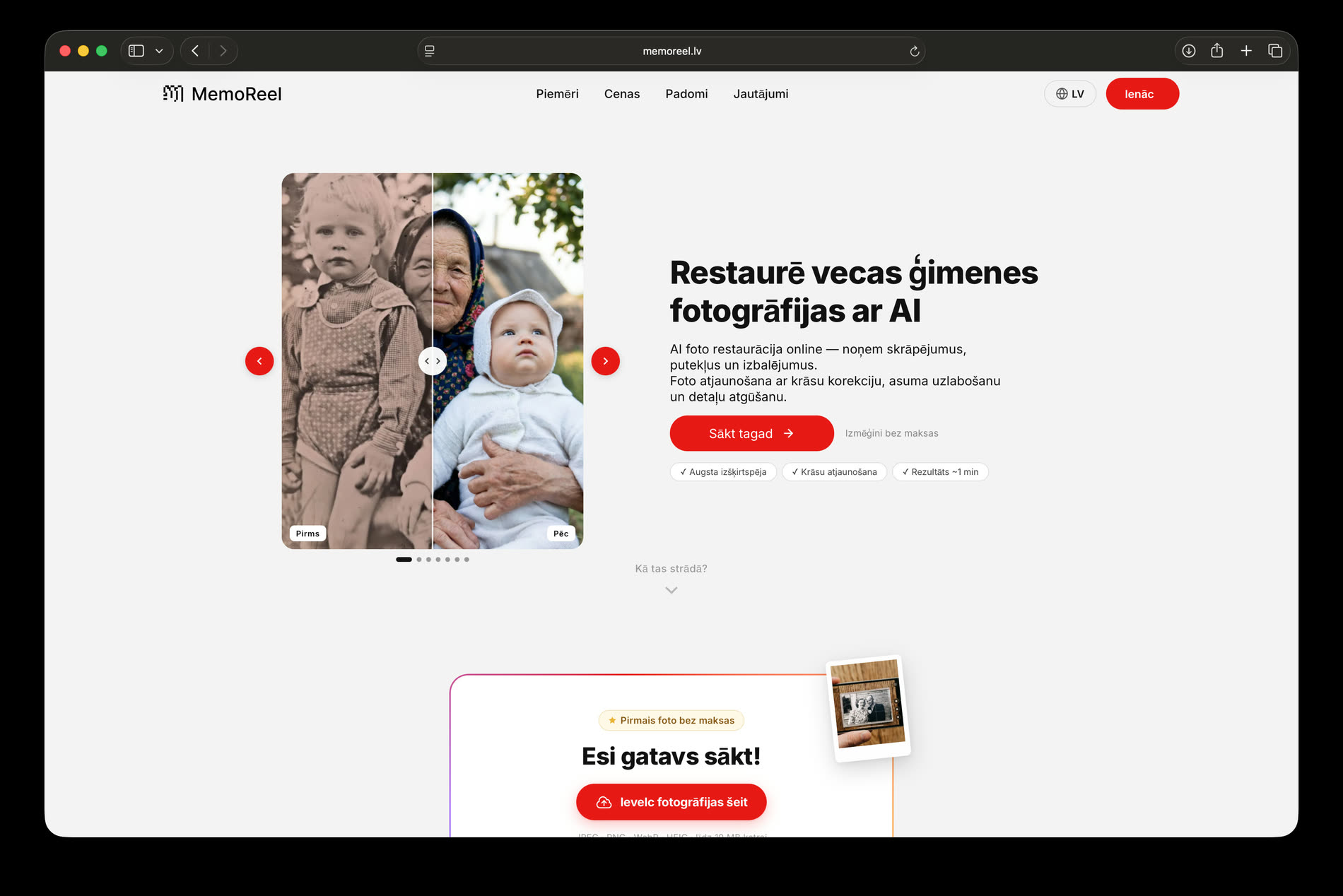
The consumer product. Sold in Latvian at memoreel.lv and in English at memoreel.family, by the photo, to people restoring a family archive. No account tour, no onboarding. A slider, a free first photo, and credit packs.

The memoreel.lv homepage: a before-and-after slider turning a damaged sepia photo into colour.
Restaurē vecas ģimenes fotogrāfijas ar AI. The slider is the pitch.

01

The proof is the product

Restoration is the rare thing you can demonstrate in one drag, so the homepage leads with a slider, not a description. First photo free. Then credit packs sized to how people arrive: ten, fifty, a hundred and fifty, five hundred. One-time, no expiry. Nobody restoring a family archive wants a monthly plan.
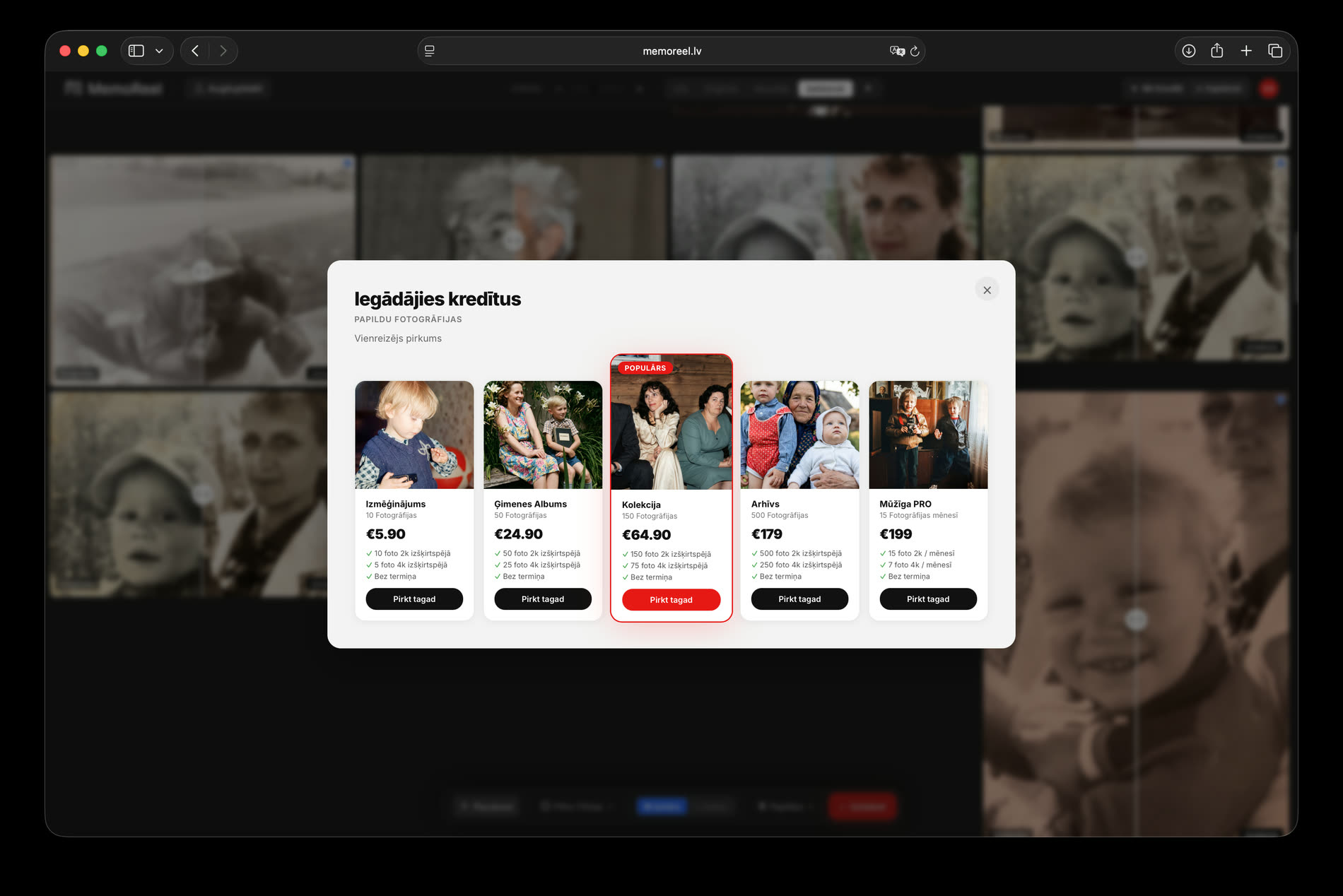
The credit-pack dialog over a grid of old photographs: five packs from €5.90 to €199, the middle one marked popular, each with a restored family photo as its picture.
Iegādājies kredītus. Five packs, one purchase, no subscription.
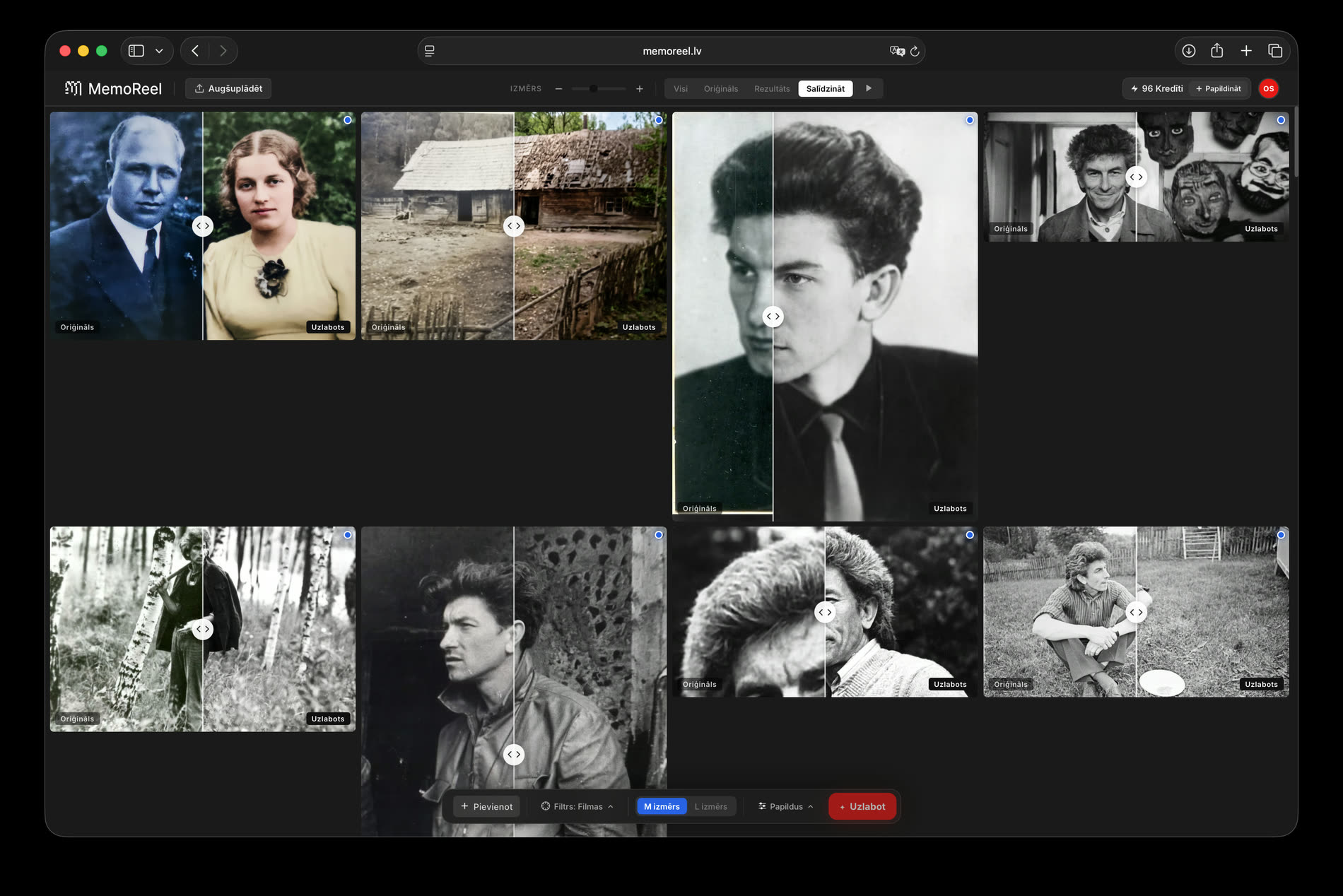
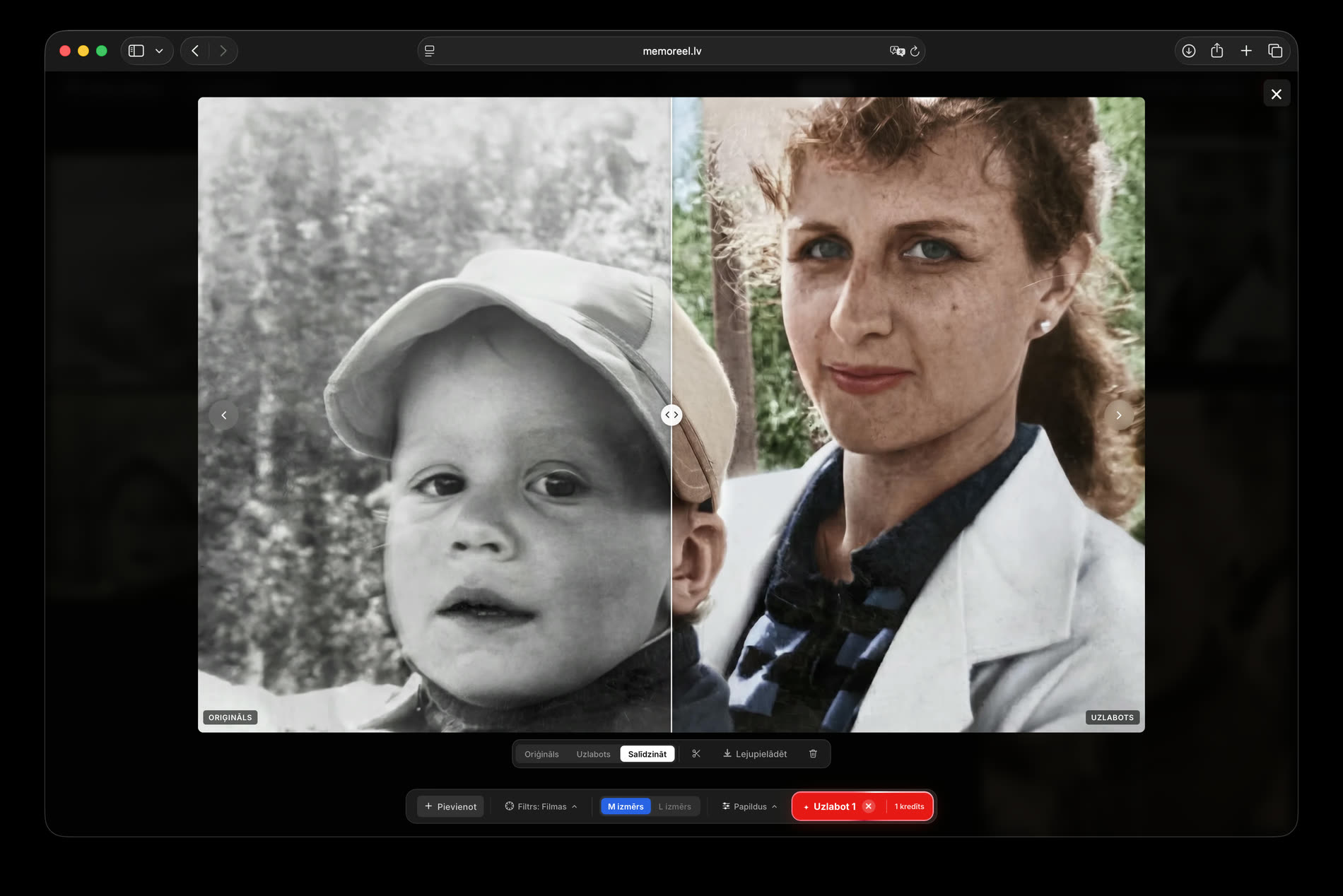
Full-screen compare view: a black-and-white photo of a woman holding a toddler, colourised on the right, split handle between. The workspace: a grid of black-and-white family photographs, each tile split down the middle with the restored half on the right.
Compare view, and the workspace. One credit per photo, spent only on enhance.

02

The original stays in view

Every tile in the workspace is a draggable split between oriģināls and uzlabots. You never quite forget what the picture looked like before, which matters when the subject is somebody's grandmother.

studio.memoreel for events · B2B

The B2B product. An AI photobooth sold to brands and agencies by the event, but the point is not the photo trick. It is the system around it: a themed campaign page, a QR code, a live wall and a lead-capture step, all of it set up by one person in an afternoon with a laptop and a screen. No booth to ship, no operator to hire.

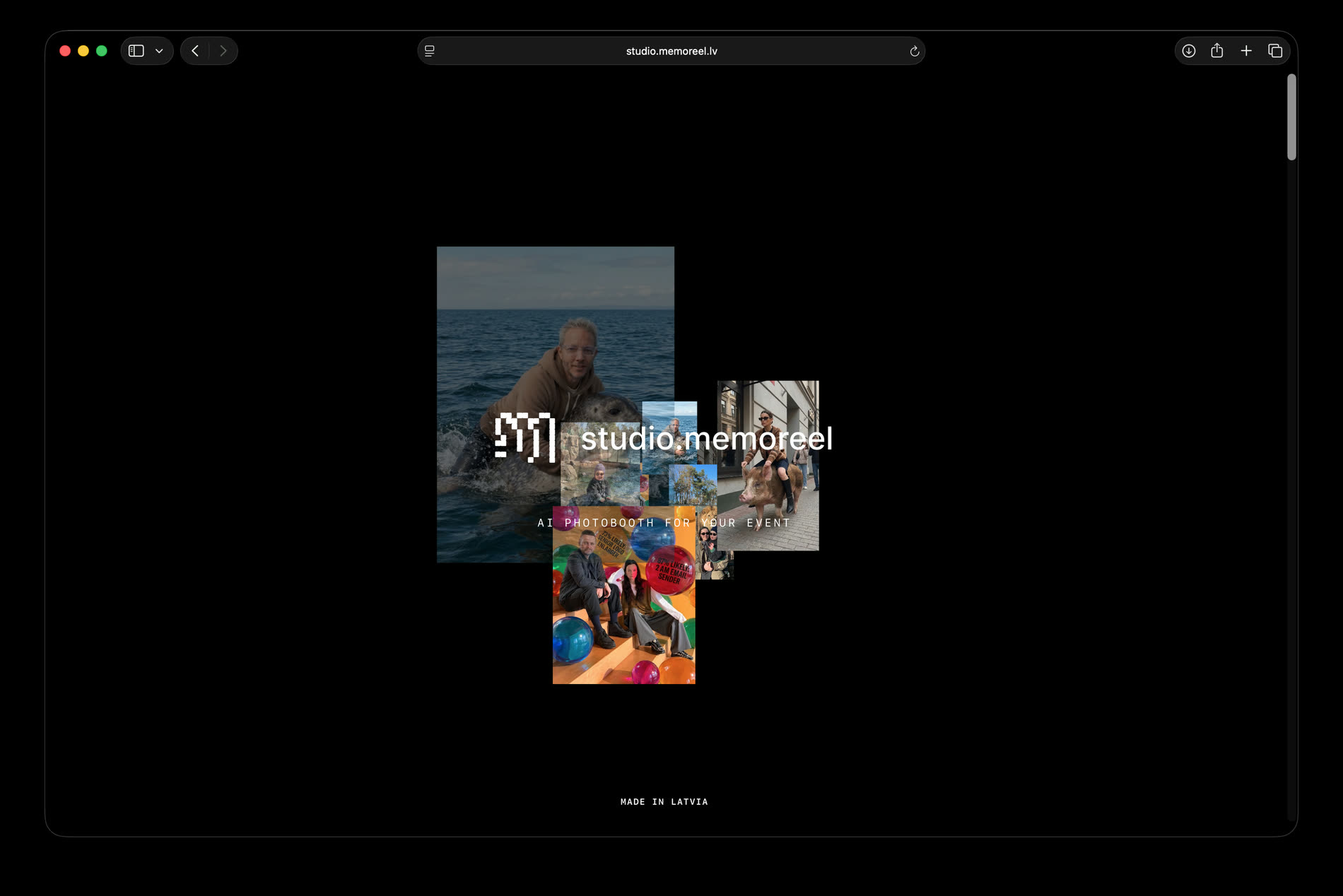
The studio.memoreel.lv landing page: a dark hero with a collage of generated portraits and the line 'AI photobooth for your event'.
studio.memoreel.lv. In English, for event budgets.

03

Four steps from idea to inbox

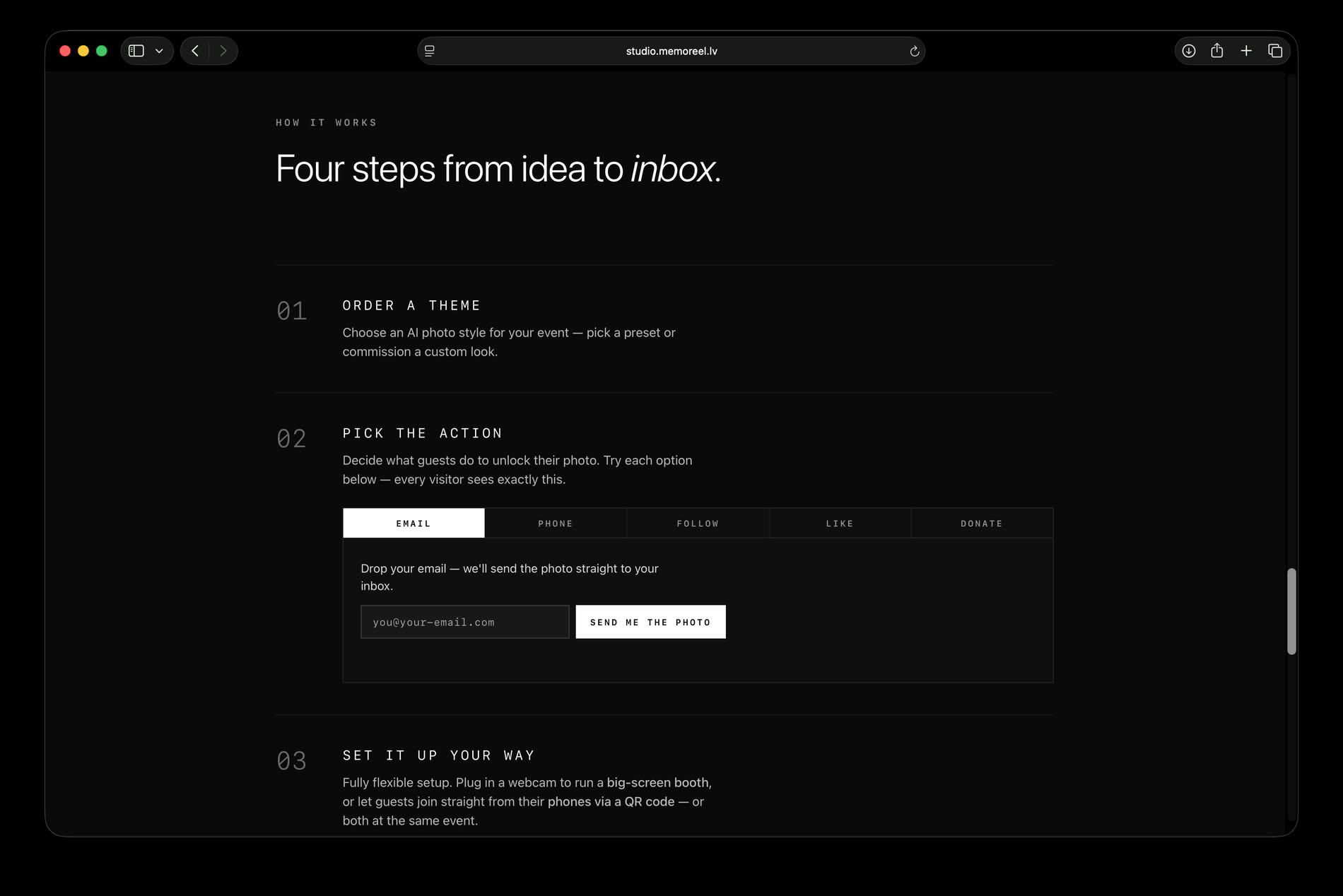
Order a theme: a preset look or a commissioned one. Pick what a guest does to unlock their photo: email, phone number, follow, like or donation. Set it up your way: a webcam on a big screen as a booth, a QR code so guests use their own phones, or both in the same room. Then it runs.

The how-it-works page: 'Four steps from idea to inbox', with steps for ordering a theme, picking the unlock action shown as a tab row of email, phone, follow, like and donate, and setting up as a big-screen booth or by QR code.
The setup page. The unlock action is the business model.

04

A control room, not a booth

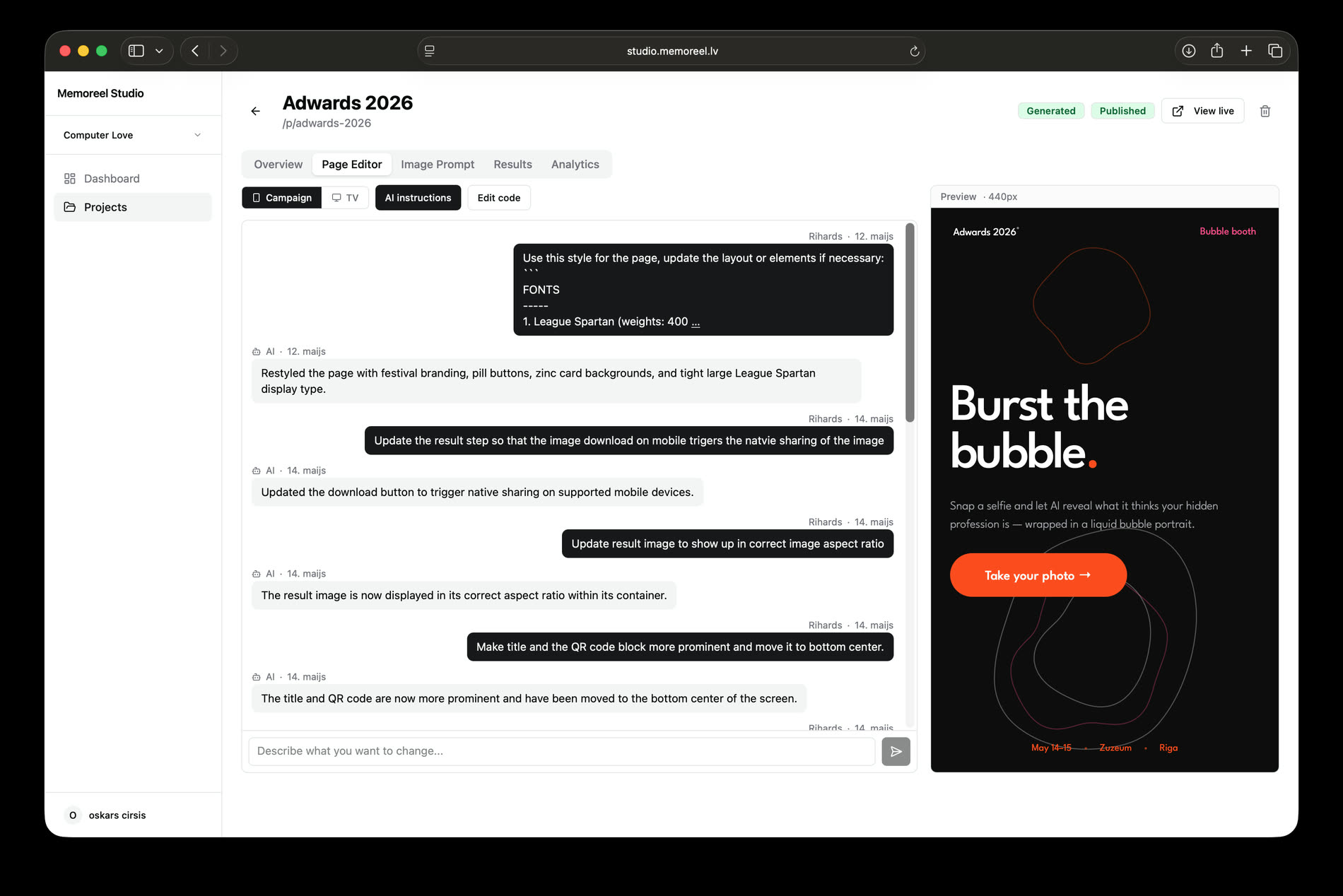
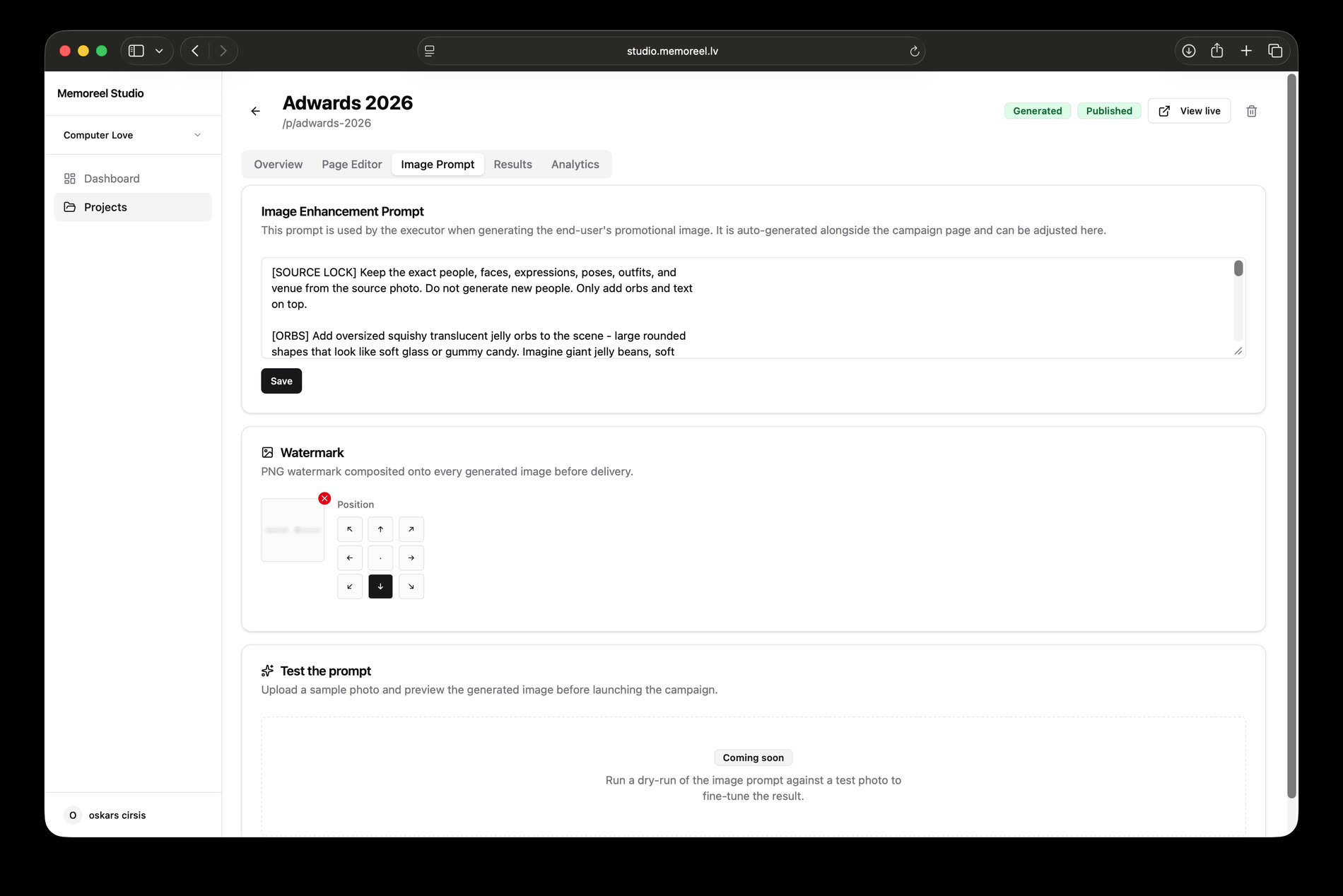
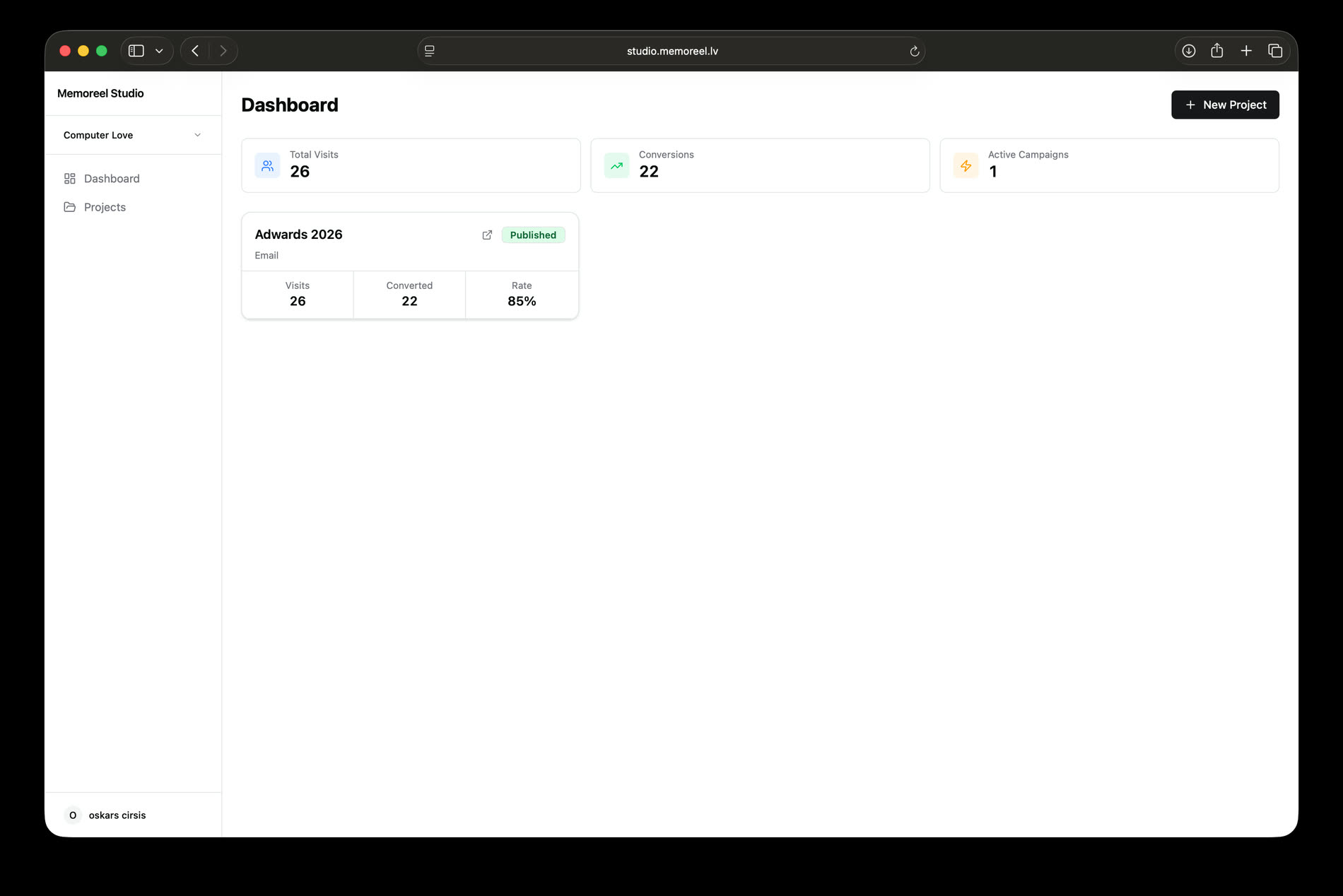
Each event is a project in the admin. The campaign page is built by describing it in a chat: fonts, buttons, the headline, where the QR code sits. The image prompt is a text box the organiser can edit, with the source lock and the watermark already in place. Visits, conversions and rate are on the dashboard as the evening goes on.

The admin page editor for Adwards 2026: a chat thread of edits on the left, such as restyling to festival branding and moving the QR block, and a live preview of the dark 'Burst the bubble' campaign page on the right.
The campaign page, edited by talking to it.
The image prompt screen: an editable prompt starting with a source lock instruction, a watermark position picker, and a 'test the prompt' panel. The Studio dashboard: total visits 26, conversions 22, one active campaign, and a project card for Adwards 2026 with an 85% rate.
The prompt, the watermark, and the numbers. 85% of visitors left a contact.
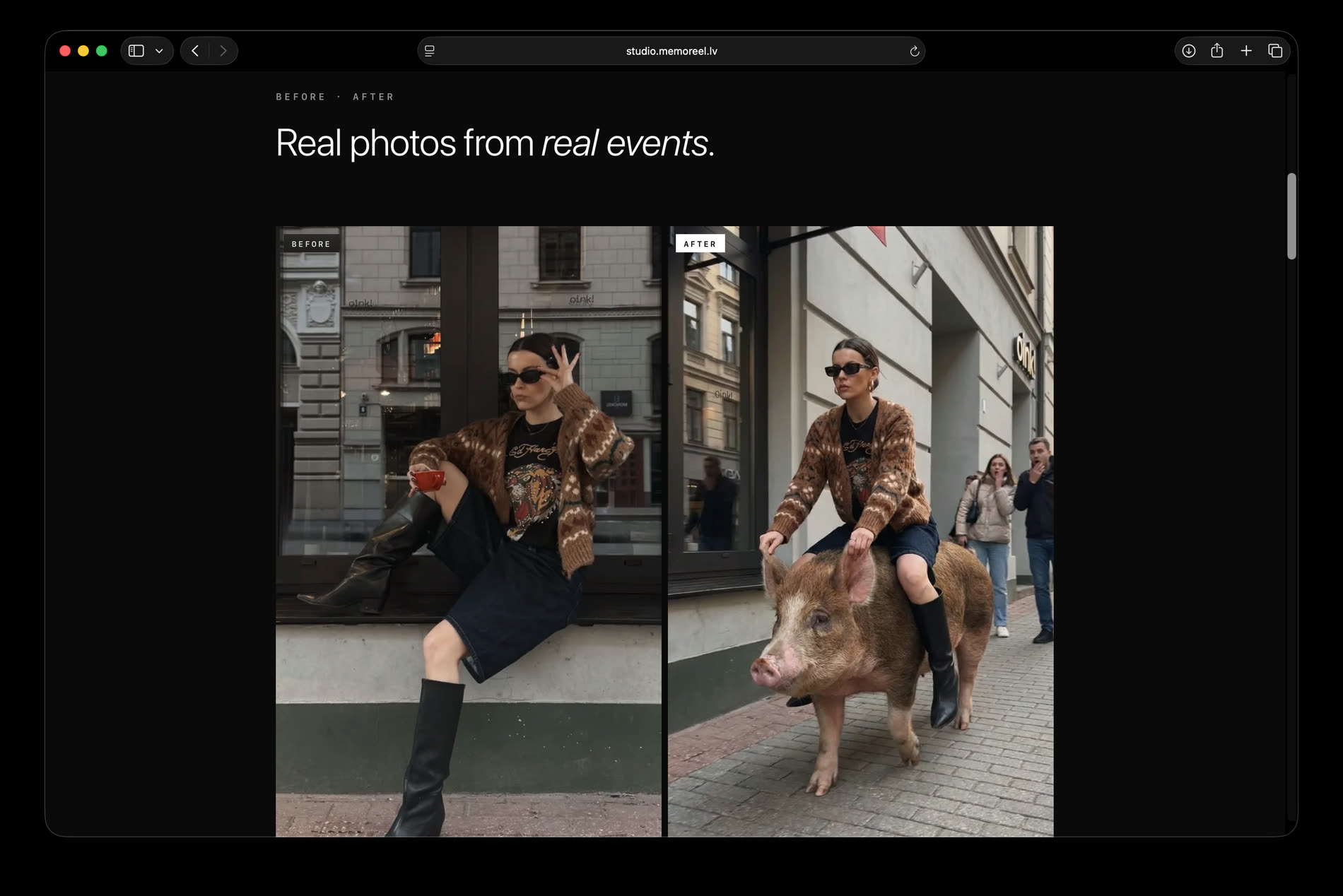
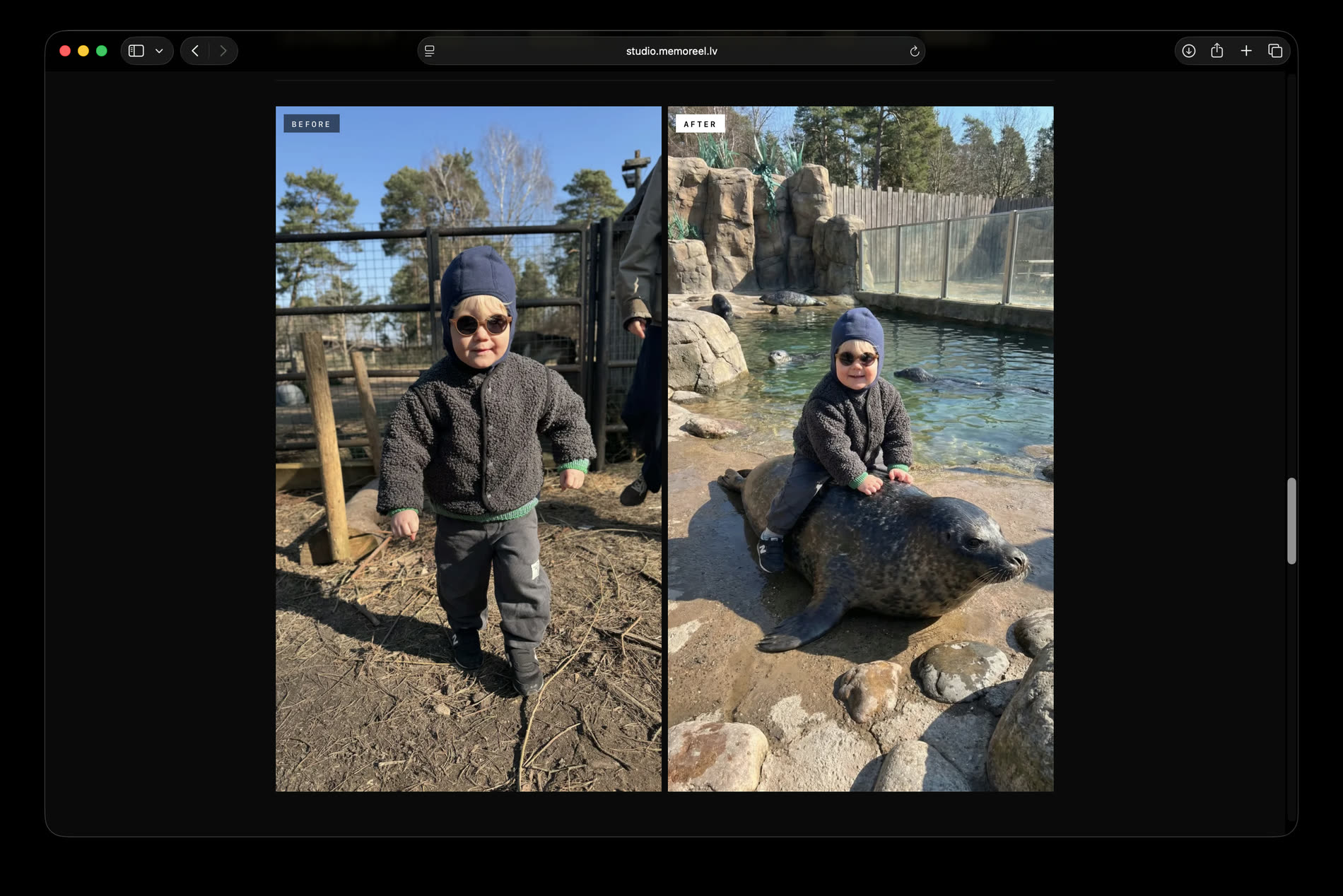
Before and after: a woman on a shop windowsill, then the same woman riding a large pig down the same street. Before and after: a toddler in a fleece jacket by a fence, then the same toddler astride a seal.
Same street, same cardigan, new pig. Same clothes, same child, different afternoon.

05

The guest stays recognisable

The trick is restraint. Generative AI wants to reinvent everything; the product gets better when it is told what not to touch. The real person, their face, their clothes and the actual venue all survive. Only the scene around them changes. The prompt opens with a source lock and a watermark goes on every image before it leaves.

06

The first event: a wall in a room

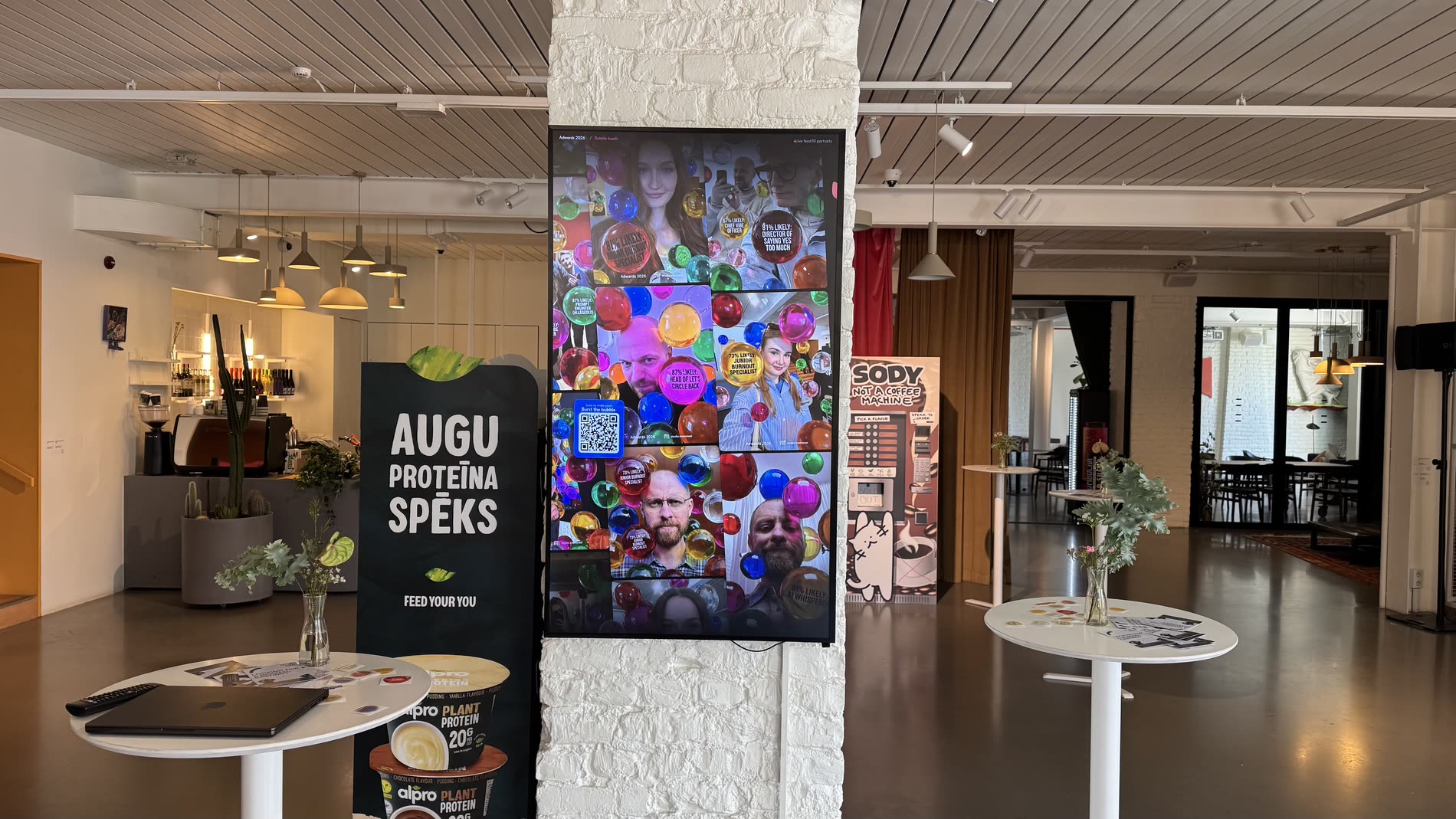
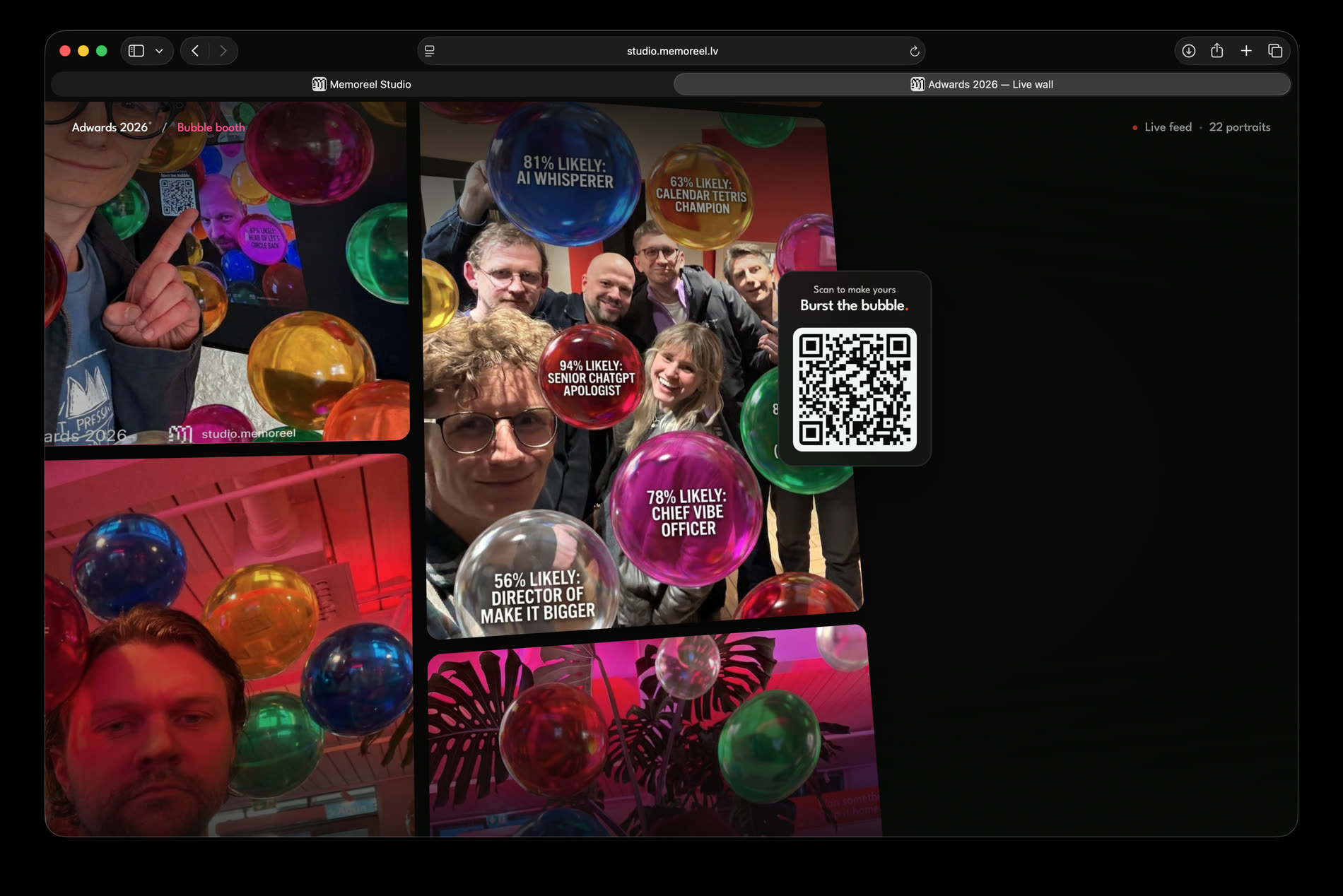
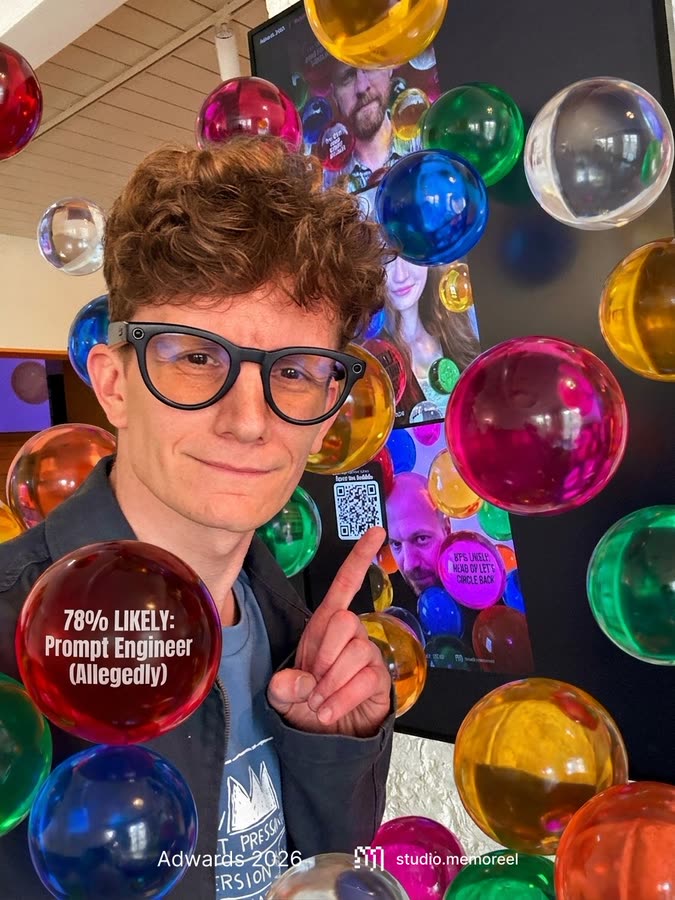
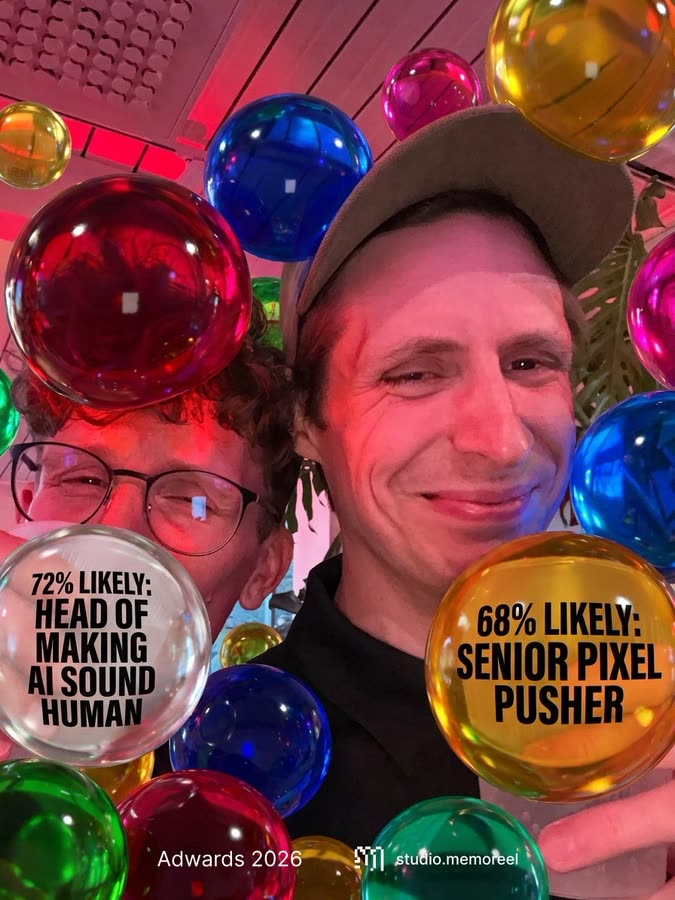
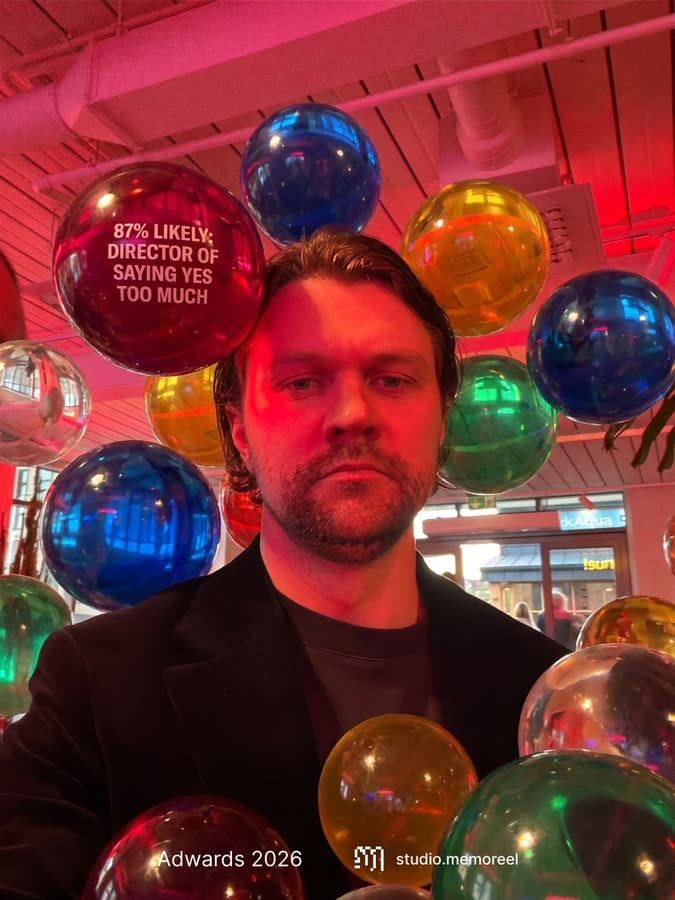
At Adwards 2026 the theme was Burst the bubble. Guests were wrapped in translucent orbs labelled with a guessed job title. Portraits landed on a live wall as they were made, with a QR card in the feed telling everyone else how to get on it. The whole installation was a screen on a pillar and a laptop on a table.

A tall screen on a whitewashed brick pillar in an open-plan venue, running the Adwards 2026 live wall of orb-covered portraits.
The installation. One screen, one pillar.
The live wall in a browser: a grid of guest portraits among coloured orbs with joke job titles, a 'scan to make yours' QR card in the grid, and a counter reading 22 portraits.
The wall itself. The QR card is one of the tiles.
New portraits arrive as guests send them. Job titles are generated per guest.
Generated portrait of a young man in glasses making a V-sign among coloured orbs, one labelled 'Prompt engineer (allegedly)'. Generated portrait of two men in red event lighting surrounded by orbs with joke job titles. Generated portrait of a man in a black blazer under red light, with an orb labelled 'Director of saying yes too much'.
Three delivered files. Watermarked, sized for a phone. Each one cost the guest an email address.

The result

MemoReel is live for consumers, in Latvian and English, selling credit packs from €5.90 to €199. MemoReel Studio is live for event buyers and has run its first wall, at Adwards 2026, converting 85% of visitors into contacts.

Kā strādā MemoReel? How the consumer product works, in Latvian.

Credits

Built at — Computer Love
Team — Oskars Cirsis, Rihards Grāvis
Next case Chorus of Light 20,000 phones as one light show